Investigation 04 / Active — 2022 → Present
FIELD 4.
Democratizing spatial audio through open-source hardware.
- Type
- Investigation · Open Hardware · Sound
- Timeline
- 2022 — Present
- Role
- Lead Researcher · Hardware · Calibration
- Affiliation
- ISRO · ArtScienceBLR
- Status
- Active investigation
Themes
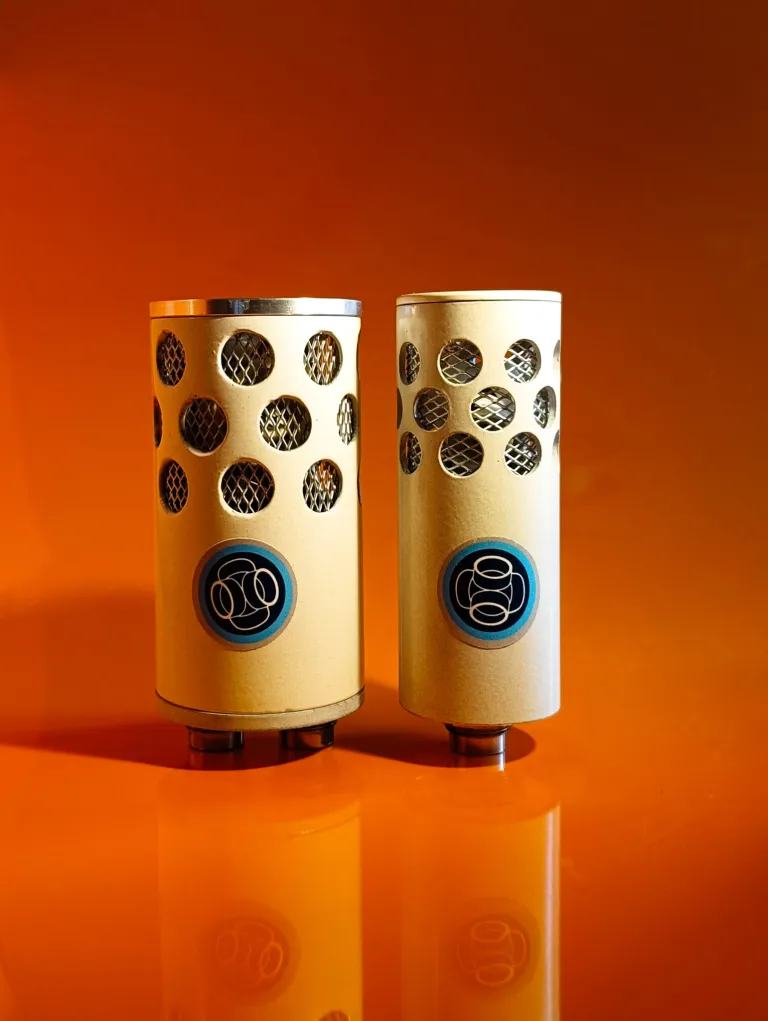
FIELD 4 is an open-source first-order ambisonic microphone.
Developed through research at The Indian Sonic Research Organisation and ArtScienceBLR, the project explores how immersive audio technologies can become more accessible to artists, researchers, educators, environmental practitioners, and independent creators.
Rather than treating spatial audio as a specialist technology, FIELD 4 investigates how listening infrastructures can be democratized through open hardware, documentation, and shared knowledge.
The Challenge
Listening, locked behind price.
Commercial ambisonic microphones remain expensive — often by an order of magnitude beyond the reach of the practitioners who would most benefit from them.
Yet immersive audio is increasingly important across research, education, virtual reality, storytelling, acoustic ecology, and preservation. The cost gap quietly decides who gets to record the world in three dimensions, and whose environments stay outside the spatial archive.
FIELD 4 emerged from a desire to lower the barriers to participation.
- ·Commercial ambisonic microphones remain prohibitively expensive.
- ·Spatial audio tools are inaccessible to most independent practitioners.
- ·Immersive listening is increasingly central to research, VR, and storytelling.
- ·Acoustic ecology and preservation work require field-grade instruments at field budgets.
Understanding Ambisonics
Sound, captured as a field — not as a pair of channels.
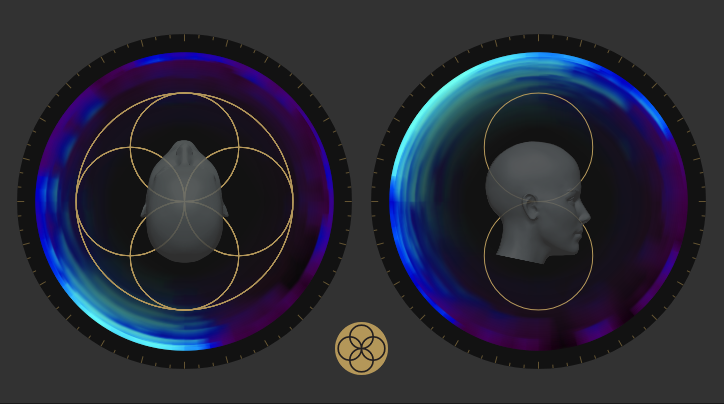
Fig. F4.A / Tetrahedral capsule arrangement → W·X·Y·Z soundfield
What it is
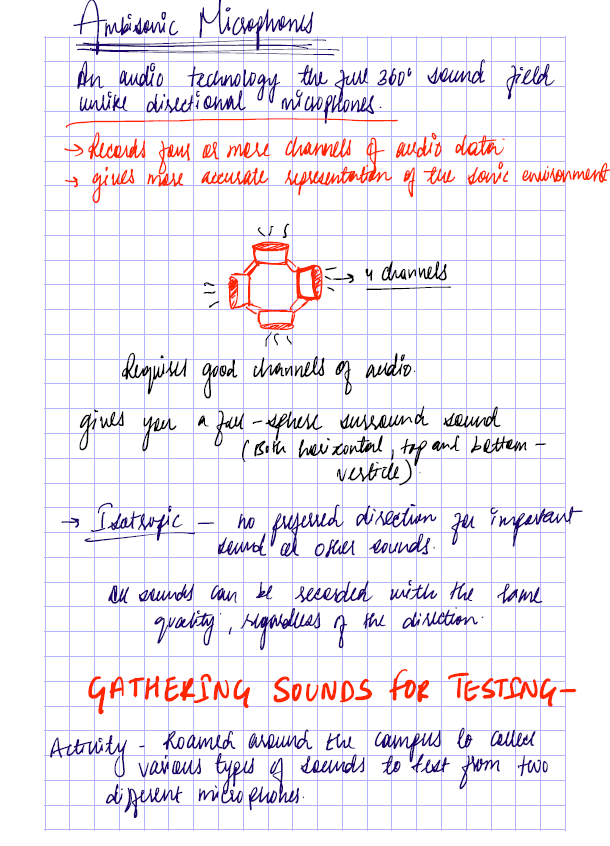
Ambisonics is a method for capturing and reproducing a full three-dimensional soundfield — not a fixed left-right image, but the energy of sound arriving from every direction around a single point.
Stereo vs. ambisonic
Stereo records two channels at two fixed positions. Ambisonics records the pressure (W) and the directional gradients (X, Y, Z) of a soundfield — which can then be rotated, decoded to any speaker array, or rendered binaurally for headphones.
A-Format → B-Format
Four capsules in a tetrahedral arrangement produce A-Format — raw per-capsule signals. Calibration converts these into B-Format — the standard W/X/Y/Z representation that downstream tools can decode for headphones, domes, or VR.
Spatial listening
The recording stops being a picture of a place and starts being a position inside it.
Designing the Microphone
A designed system, not a single object.
- 01
Tetrahedral capsule array
- 02
Machined aluminium housing
- 03
Protective acoustic mesh
- 04
Base structure & mount
- 05
On-board preamp electronics
- 06
Standard 7-pin DIN connector
Calibration Pipeline
Why calibration is the instrument.
Capsules drift. Housings resonate. No two units are identical out of the workshop. Without calibration, an ambisonic microphone produces an evocative-sounding lie — a soundfield that seems spatial but does not place sources where they actually are.
The FIELD 4 pipeline is built so every unit is measured, characterised, and shipped with its own correction data.
- 01
Measurement
Anechoic and semi-anechoic capture of each capsule across azimuth and elevation.
- 02
Impulse Responses
Per-capsule IRs sampled across the full sphere; logged for reproducibility.
- 03
Filter Generation
Inverse filters synthesised from measured IRs to flatten capsule response.
- 04
Calibration Matrix
Per-unit calibration matrix encoding capsule geometry and frequency response.
- 05
B-Format Conversion
A-Format → B-Format pipeline, validated against reference soundfield recordings.
The measurement is not a finishing step. The measurement is the microphone.
Open Hardware
Built to be shared.
FIELD 4 is released as open hardware.
Schematics, capsule geometry, housing files, calibration notebooks, and build notes are published so that any practitioner, lab, or classroom can rebuild, adapt, or improve the instrument.
The point is not a product launch. The point is a shared baseline — a microphone that others can fork, recalibrate against their own constraints, and use to record places that would otherwise stay outside the spatial record.
Documentation, accessibility, and community participation are treated as part of the engineering — not as a marketing layer on top of it.
Applications
Where the instrument goes to work.
- APP.01Acoustic Ecology
- APP.02Environmental Monitoring
- APP.03Virtual Reality
- APP.04Film
- APP.05Immersive Storytelling
- APP.06Spatial Documentation
- APP.07Sound Archives
- APP.08Research & Teaching
Chapter — Field documentation
Listening as Preservation
Infrastructure for what we are losing.
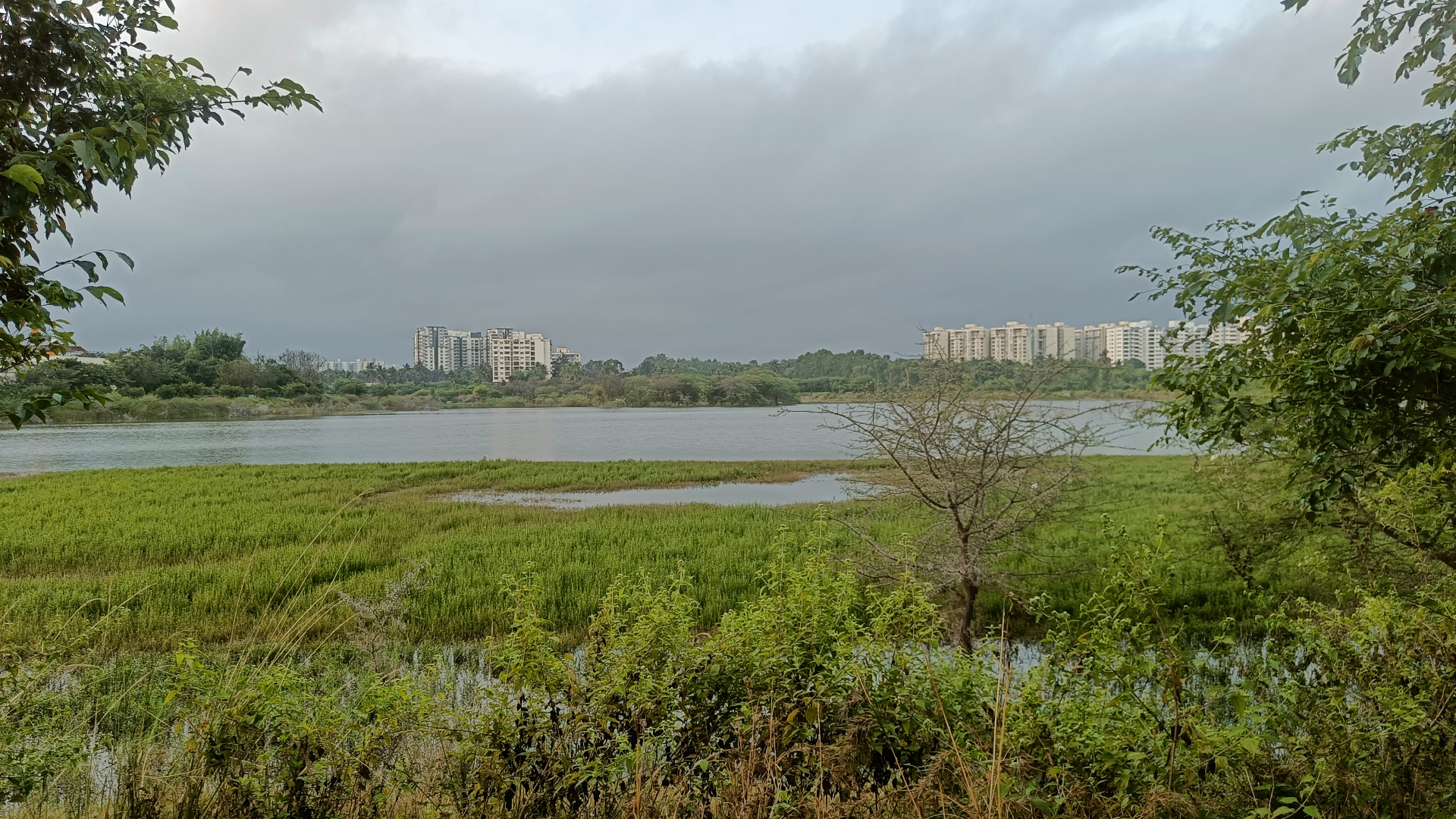
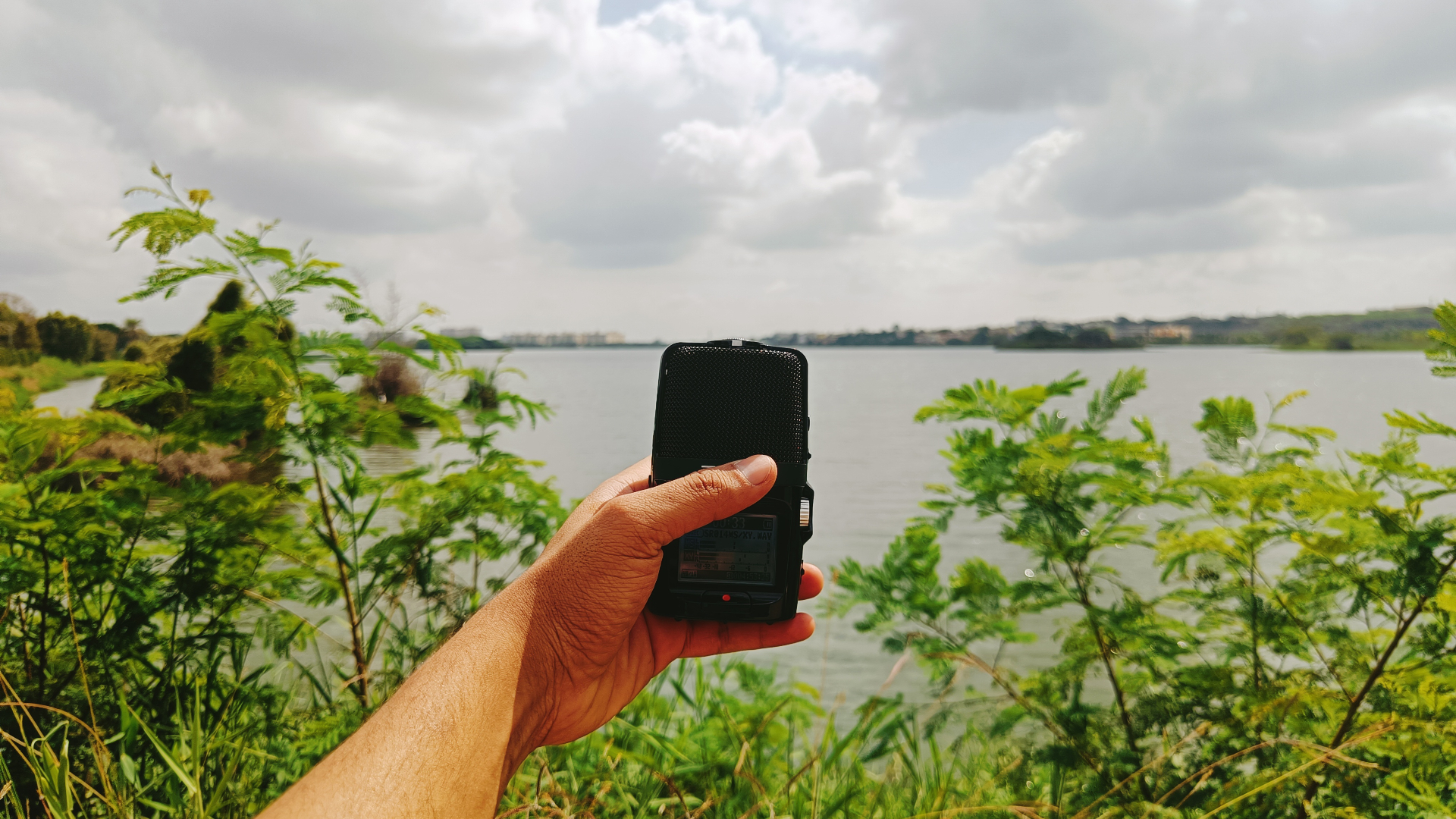
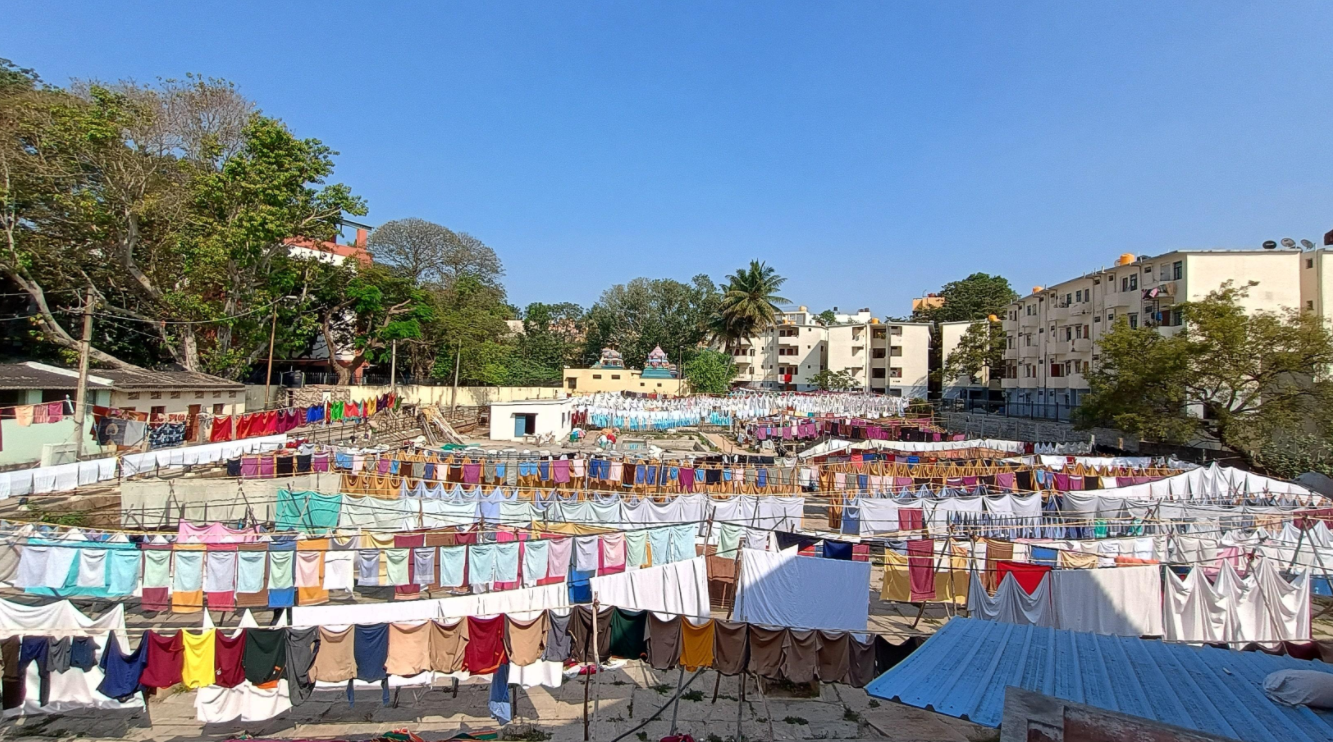
Places change faster than we record them. Acoustic environments — a lakebed, a market lane, a forest at dawn — disappear quietly, long before the visible landscape catches up.
FIELD 4 is positioned as infrastructure for that record. Not as a single project, but as a low-cost, well-calibrated instrument that practitioners, students, and communities can use to document the places, ecologies, and cultures they care about.
Preservation. Memory. Ecology. Documentation. Listening.
The microphone is one node in a longer thread that runs through the studio — connecting ecological fieldwork, sonic memory, teaching, and the ongoing documentation of declining commons.
Field note / Cauvery basin · 2023
"The first usable recording arrived at four in the morning. Stereo would have flattened it. In ambisonics, the river was a position, and the forest was the room around it."
Archive
Papers, build notes, recordings.
A living archive of research outputs, technical documentation, calibration material, and field recordings. Files will appear here as each layer of the project is released into the open.
- Research PaperFIELD 4 — design, calibration & open releasePDF — Coming Soon
- Technical DocCapsule geometry, housing & PCB referencePDF — Coming Soon
- CalibrationIR datasets and inverse-filter notebooksPDF — Coming Soon
- Build ProcessAssembly notes — rev. 1 through rev. 5PDF — Coming Soon
- Prototype ImagesPhotographic record across iterationsPDF — Coming Soon
- PublicationsFuture papers, workshops & writingsPDF — Coming Soon
- RecordingsField recordings — Cauvery basin, lake systemsPDF — Coming Soon
Archive · Images
Build & calibration — workshop record
Build & calibration — workshop record
Archive · Images
Field deployments — ecologies, lakes, forests
Field deployments — ecologies, lakes, forests
Archive · Documents
Papers, reports, downloads
FIELD 4 — Technical Whitepaper
Capsule geometry, A→B format conversion, calibration pipeline, measured performance.
Open Hardware BOM & Build Guide
Parts list, machining specs, PCB reference, and soldering notes for the v5 housing.
Calibration Notebook — IR dataset & inverse filters
Jupyter notebook covering impulse response capture, filter synthesis, and validation.
Field Recording Protocol — ecological sites
Practical guide for deploying FIELD 4 in lakes, forests, and urban environments.
Workshop slides — Spatial audio for practitioners
Teaching deck used at ArtScienceBLR & university workshops on ambisonics.
Press kit — FIELD 4 v5 release
Images, fact sheet, and short text for press, exhibitions, and citations.
Archive · Links
External references
The Indian Sonic Research Organisation
Host institution and ongoing collaborators.
ArtScienceBLR
Workshop, fabrication, and residency partner in Bangalore.
Ambisonics — primer
Background reading on the soundfield representation FIELD 4 produces.
Related — WAVES (in-studio listening system)
Companion investigation: spatial reproduction system for the recordings FIELD 4 makes.
Related — A Declining Commons
Ecological context for the lake and wetland recordings.
Related — Music Practice
Where the captured material re-enters the studio as compositional material.
Archive · Field notes
From the field
- 2024 · 03
Calibration in the anechoic chamber
Two days mapping per-capsule response across azimuth and elevation. Cleaner symmetry than v2; minor 7kHz dip on capsule C remains and is now being corrected through the inverse filter set.
- 2023 · 11
Dawn at the Cauvery basin
The first usable recording arrived at four in the morning. Stereo would have flattened it. In ambisonics, the river was a position and the forest was the room around it.
- 2023 · 07
Bangalore lake — first ecological deployment
Tested the rev. 4 housing against monsoon humidity. Wind protection still inadequate at the rim; a new fur and basket prototype is queued for rev. 6.
- 2023 · 02
Workshop — assembling capsule arrays with students
Six students built and partially calibrated their own arrays over a weekend. The build is teachable. The calibration step is where the project actually lives.
Archive · Research notes
Reading, thinking, marginalia
- 2024 · 05
Reading — Gerzon on soundfield microphones
Re-reading the early Gerzon papers alongside our own measurements. The intuition that calibration is the instrument, not a finishing step, is already there in the 1970s literature.
- 2024 · 01
On open hardware and listening
Notes towards an essay: who gets to record the world in three dimensions, and whose acoustic environments stay outside the spatial archive when instruments cost a year's salary.
Archive · Roadmap
What comes next
- —
Public BOM release
Coming SoonOpen the full bill of materials and build files under a permissive licence for independent makers, classrooms, and labs.
- —
Calibration dataset — open release
Coming SoonPer-unit IR datasets and inverse filter notebooks, packaged so any FIELD 4 builder can run the same calibration on their own assembly.
- —
Rev. 6 — weatherised housing
In ProgressNew rim, basket, and mesh designed for long ecological deployments in monsoon and coastal conditions.
- —
FIELD 4 → WAVES integration
In ProgressEnd-to-end path from capture (FIELD 4) to in-studio spatial reproduction (WAVES), documented as a single workflow.
- —
Public listening room — touring exhibition
Coming SoonA travelling listening room using FIELD 4 recordings and a portable decode rig, designed for galleries, schools, and field stations.
Related investigations