I.03 · Concluded · 2019 — 2022
Blockchain Food Chains
Trust infrastructure for farmers.
- Status
- Concluded
- Timeline
- 2019 — 2022
- Ref
- I.03
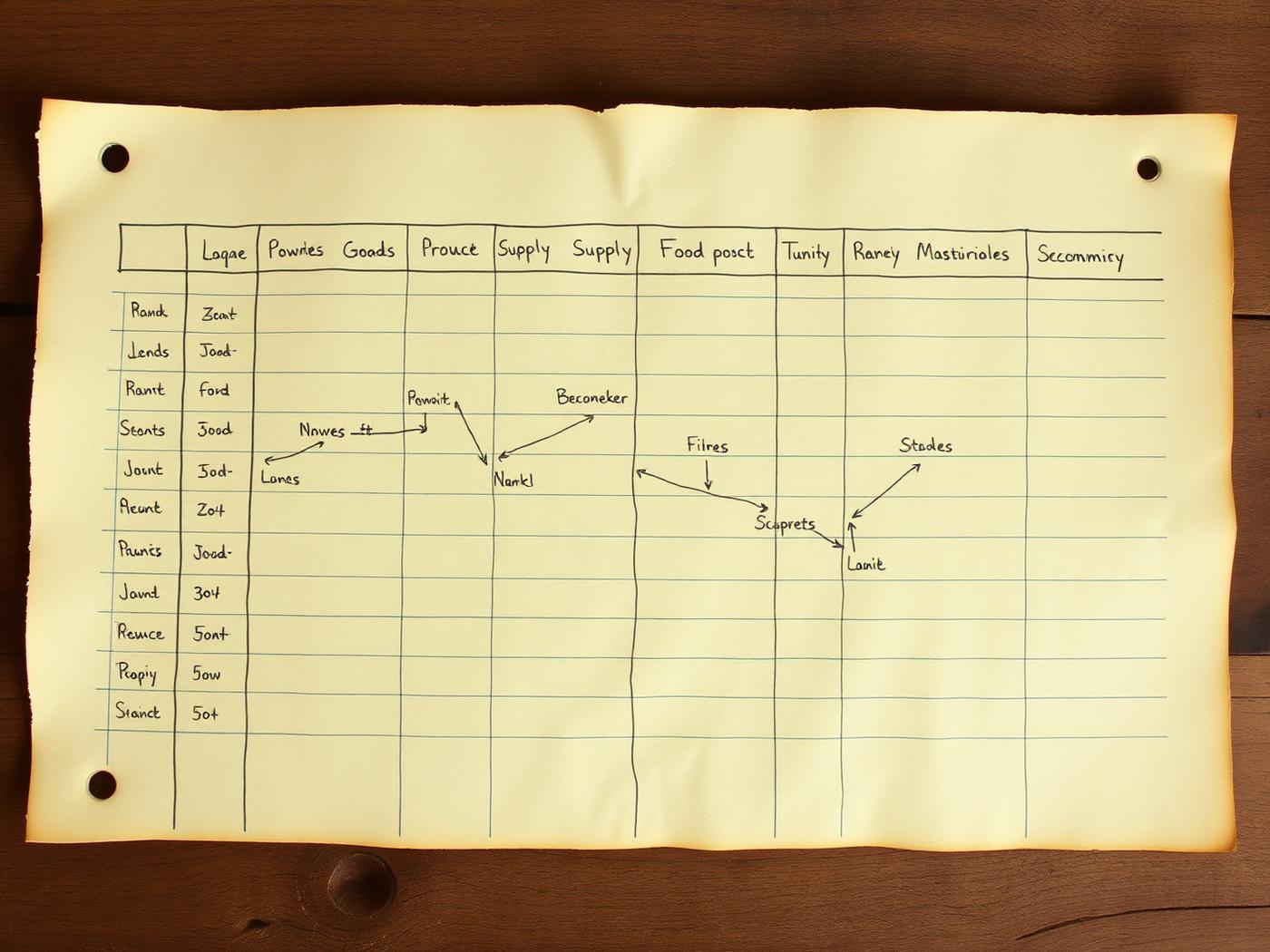
Project overview
What this is, and why it exists.
Most supply-chain blockchains repeat the asymmetries they claim to fix. Producers stay invisible; intermediaries keep the margin.
Can distributed-trust primitives actually return value and agency to producers, or do they only reorganise extraction?
A three-year inquiry into food supply chains in southern India — cardamom, coffee, and millet co-operatives — testing whether blockchain primitives can be made to serve producers rather than platforms. The work concluded with a guarded answer: sometimes, under narrow conditions, and never as a substitute for organising.
Background
Context, origins, problem space.
Context
Smallholder producers in India routinely receive a fraction of the final retail value of their crop. Conventional supply-chain software encodes this asymmetry; blockchain pilots in this space had largely done the same.
Research origins
The investigation began with a co-operative of cardamom growers asking a deceptively simple question: can we see, and prove, where our crop ends up?
Problem space
Provenance without power is theatre. Any trust system has to start from producer governance, not consumer reassurance.
Methods
The vocabulary of the work.
The methods deliberately privileged producer-side workshops over technology-vendor conversations. Most working sessions were held in cooperative offices, not in cities.
Research
- Stakeholder mapping
- Co-operative interviews
- Comparative pilot review
- Economic modelling
Design
- Token design
- Governance protocols
- On-ramp UX for low-literacy contexts
Documentation
- Case studies
- Working papers
- Conference talks
Process
Timeline, fieldwork, iteration.
The arc moved from optimistic prototype to careful retreat. The final outputs are more honest for it.
- 2019.04
Cardamom cohort — Idukki
Initial six-month engagement with a 200-member co-operative.
- 2020.02
First prototype
Provenance token piloted across two harvest cycles.
- 2021.01
Coffee comparison study
Parallel work with a Coorg cooperative; clarified governance preconditions.
- 2022.06
Concluding paper
Published findings; cooperatives retained the system, scope explicitly bounded.
Documentation
Images, field notes, recordings.
Most documentation is textual — ledgers, transcripts, governance drafts. The visual record is intentionally sparse.

Outputs
What the work produces.
- PaperTrust without theatre — concluding findings
- PrototypeProvenance token v3 — handed to cooperative
- TalkDesigning against extraction (conference talk, 2022)
Related work
Where this connects.
Resources
Downloads, references, further reading.
- PDFConcluding paper — Trust without theatre — coming soon
- ReferenceCardamom cohort governance charter (2020) — coming soon